
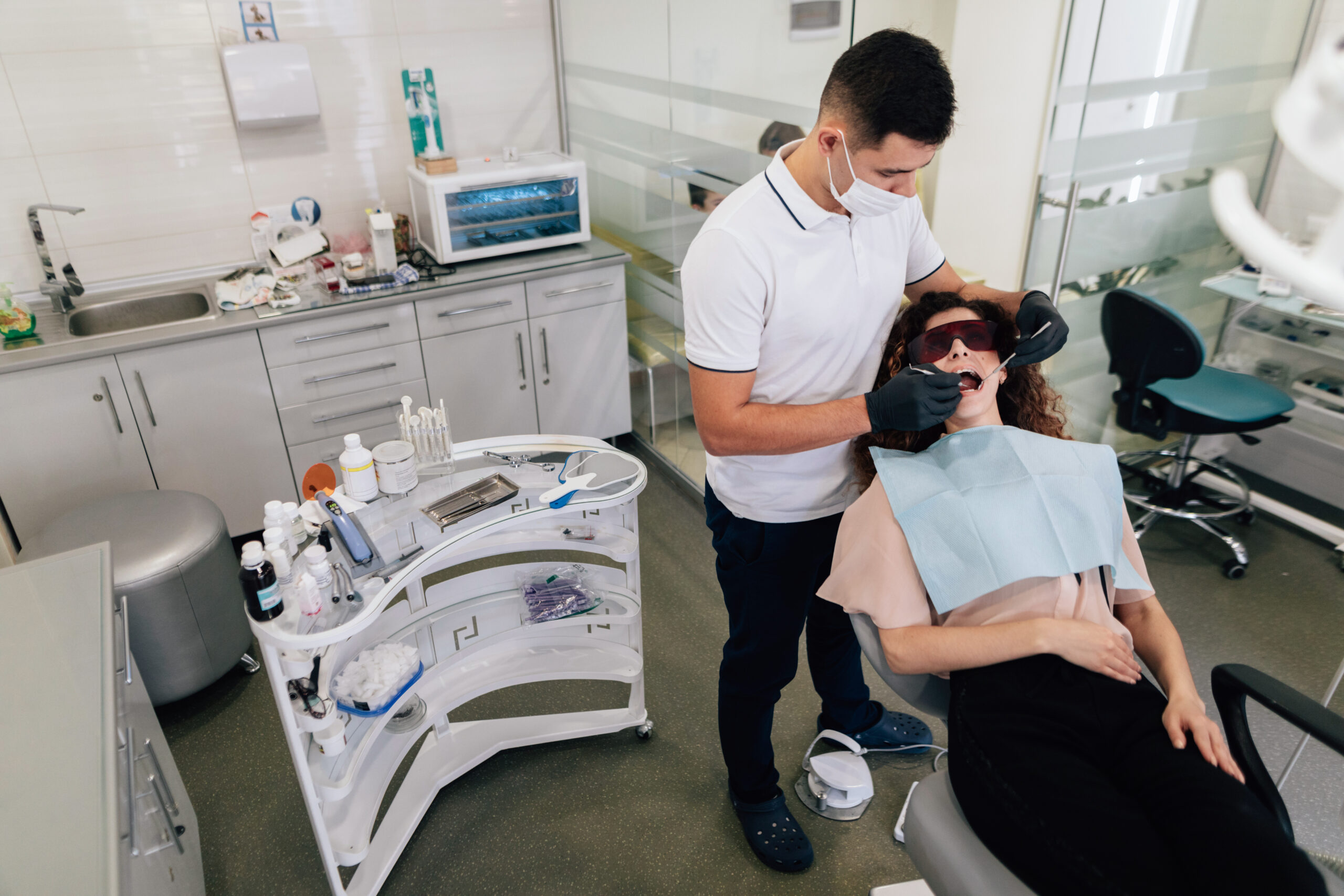
There is a version of a dental visit that most people have experienced dozens of times: the hygienist cleans your teeth, the dentist looks around for a few minutes, mentions a cavity or says everything looks fine, and you leave with a goodie bag and a reminder to floss more. That visit has its place. But it is an incomplete picture of what a dental examination is actually capable of revealing and in a city where a significant portion of the population tracks sleep quality, inflammation markers, and biological age, it is worth asking whether your dental visits are working as hard as the rest of your health routine.
At Santa Monica Dental, the way we think about Santa Monica dental care has shifted. Not because we have added unnecessary complexity, but because the science connecting oral health to systemic health has matured to a point where ignoring those connections in a clinical setting would mean giving patients less information than they deserve.
What the Mouth Is Actually Telling Us
The oral cavity is one of the most diagnostically rich environments in the body. It is also one of the most accessible, with no bloodwork, no imaging ordered through a specialist, and no waiting room at a separate facility. A trained clinician with good lighting, a probe, and current X-rays can observe tissue quality, bone density patterns, salivary characteristics, wear signatures on enamel, and inflammatory responses that collectively tell a story about what is happening systemically.
Most of that story goes untold in a standard cleaning appointment because the clinical encounter is structured around finding decay, checking existing restorations, and scaling calculus. That is necessary. It is not sufficient if you are interested in your mouth as a window into the rest of your body.
Gum Tissue as a Systemic Inflammation Proxy
Periodontal tissue is among the most vascular soft tissues in the human body, and it responds to systemic inflammation faster and more visibly than most other accessible tissues. When a patient presents with gum inflammation that does not match their home care habits, moderate brushing and flossing, yet persistently red or bleeding tissue, that mismatch is a clinical signal worth following.
The conditions most commonly associated with gum inflammation that exceeds what local bacterial load alone would explain include undiagnosed or poorly controlled type 2 diabetes, autoimmune conditions such as lupus or Crohn’s disease, haematological disorders, hormonal fluctuations including thyroid dysfunction, and certain nutritional deficiencies, particularly vitamin C and vitamin D. None of these are diagnosed in a dental office. All of them produce oral signs that a thorough Santa Monica dental care examination can identify as worth investigating elsewhere.
Enamel Wear Patterns as a Diagnostic Map
Where and how enamel wears down is not random. Each pattern has a specific clinical signature that points toward a specific cause, and reading those patterns is a skill that belongs in every comprehensive dental examination.
Erosion distributed more uniformly across all tooth surfaces, with a flat, glazed appearance and loss of surface texture, points toward dietary acid high consumption of citrus, carbonated beverages, or fermented foods. For patients on high-protein diets that include regular apple cider vinegar or lemon water, this pattern is becoming increasingly common in Santa Monica practices.
Attrition flat, shiny facets on the biting surfaces and cusp tips indicate mechanical wear from tooth-to-tooth contact. In isolation during waking hours, it suggests parafunction such as bruxism. When concentrated on specific teeth and combined with certain bite patterns, it can indicate a bite alignment issue that has been slowly redistributing load onto particular teeth for years.
Abrasion along the cervical margins, V-shaped notching at the gumline points toward toothbrush trauma, typically a combination of a hard-bristle brush and a scrubbing technique rather than gentle circular strokes.
What Bone Density Patterns in Dental X-Rays Can Suggest
Dental radiographs are bone images. The alveolar bone, the bone supporting the teeth, is not uniquely separate from the rest of the skeletal system, and changes in its density and architecture can reflect systemic conditions that affect bone more broadly.
Generalised reduction in alveolar bone density in a patient with no history of significant gum disease raises a flag for systemic bone loss. Osteoporosis, which affects approximately 10 percent of adults over 50 and is significantly underdiagnosed in men, is sometimes first suggested through dental radiographic findings.
Bisphosphonate medications prescribed for osteoporosis, multiple myeloma, and certain breast and prostate cancers have direct implications for dental treatment, particularly extractions and implant placement. Knowing a patient is on these medications before performing invasive procedures is not just clinically important; it is essential for avoiding a serious complication called medication-related osteonecrosis of the jaw. The medication history conversation is, therefore, a clinical necessity in any thorough Santa Monica dental care visit, not a formality.
Salivary Changes as Early Warning Signs
Saliva is one of the most underappreciated diagnostic fluids in clinical medicine. Changes in salivary flow rate, consistency, and composition can indicate conditions ranging from Sjögren’s syndrome, an autoimmune disease that significantly reduces salivary and lacrimal gland output, to early diabetes, dehydration, and the side effects of dozens of commonly prescribed medications.
A patient who reports progressive dry mouth, technically called xerostomia, without a clear medication explanation deserves more than a recommendation for sugar-free gum. A thorough clinical history that explores the timeline, any other symptoms of dryness, joint pain, or fatigue, and the patient’s current medication list can determine whether a referral to a rheumatologist or an internal medicine physician is appropriate.
Soft Tissue as a Recurring Surveillance Site
Every comprehensive Santa Monica dental care visit includes soft tissue examination of the lips, cheeks, tongue, floor of the mouth, palate, and throat. The primary purpose is oral cancer screening, which remains critically important given the rising incidence of HPV-related oropharyngeal cancers in adults under 50.
Recurrent aphthous ulcers, canker sores that are large, frequent, or unusually persistent, can signal coeliac disease, inflammatory bowel disease, Behçet’s syndrome, or B12 and folate deficiency. A patient who mentions they have always had frequent canker sores and has never discussed it with a physician is describing a symptom pattern worth investigating.
Making the Most of the Clinical Encounter
None of this requires a longer appointment or a different kind of dentist. It requires a structured examination protocol, attention to detail, and a clinician who communicates findings in enough depth for the patient to understand what they mean and what, if anything, to do with the information.
At Santa Monica Dental, every comprehensive visit includes periodontal assessment with pocket depth recording, enamel and wear pattern evaluation, soft tissue examination, radiographic bone quality assessment, and a medication and health history review. When findings suggest something worth discussing with another clinician, we say so clearly, without alarm, and with a specific explanation of what we observed and why it is relevant.
Santa Monica dental care, done at this level, is not separate from your health practice. It is part of it.