
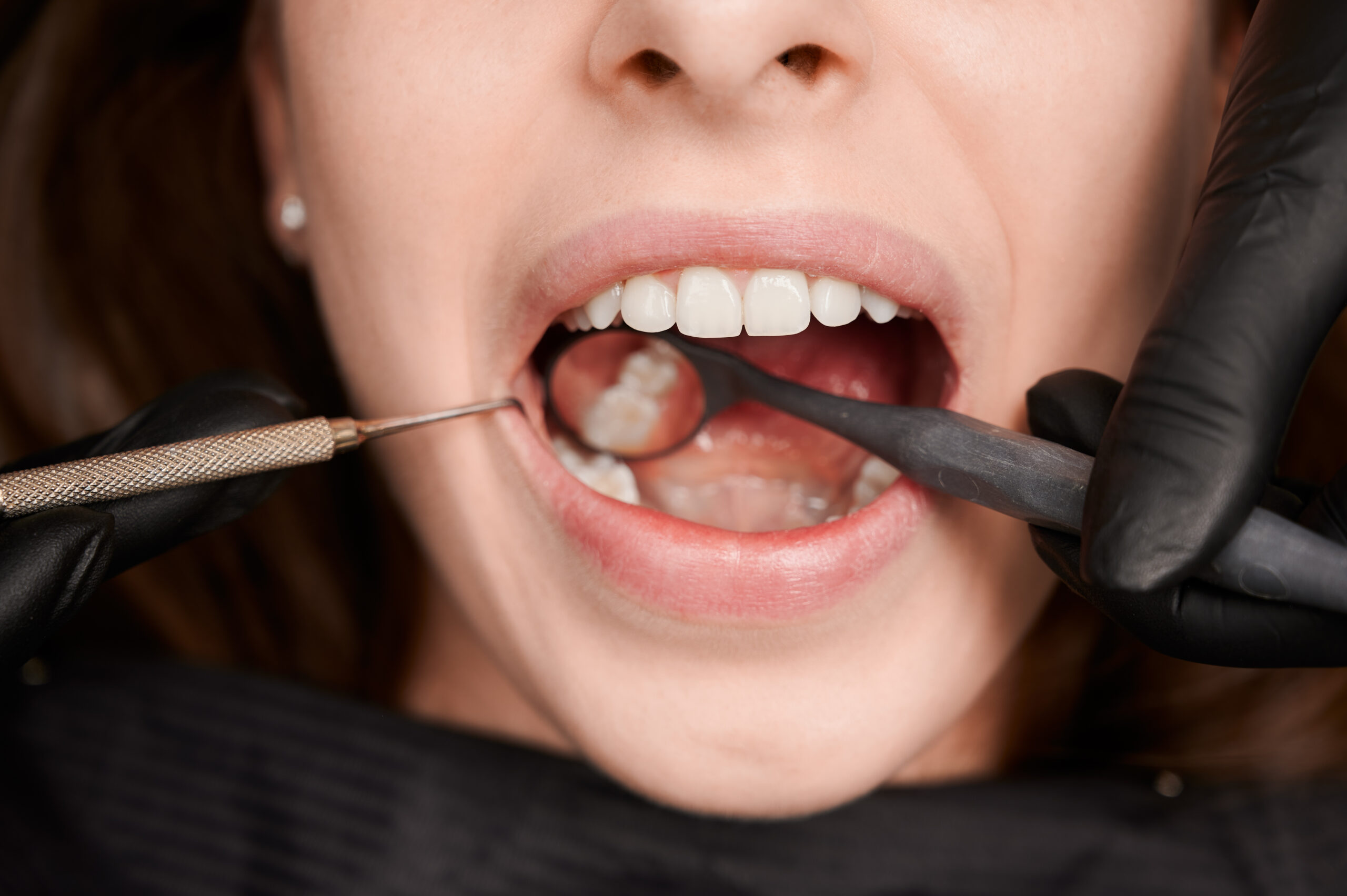
Fifteen years ago, a patient asking about crown materials would get one real answer: porcelain fused to metal. It worked, it was durable, and the only complaint was the dark line that eventually appeared at the gumline when gums receded slightly with age, that grey shadow that announced the crown to anyone who looked closely enough. Today, that conversation has changed completely. Patients coming in for Santa Monica dental crowns now ask specifically about zirconia and e-max, often by name, often with opinions already formed from research they have done before the appointment.
That is a good thing. These are genuinely different materials with different strengths, and the choice between them has real consequences for how the crown looks and how long it lasts. At Santa Monica Dental, we think patients who understand the difference make better decisions so here is the honest breakdown.
Why the Old Metal-Based Crowns Are Mostly Gone
Before getting into the comparison, it helps to understand what both materials replaced and why. Porcelain-fused-to-metal (PFM) crowns had a metal substructure, usually a nickel or cobalt-chromium alloy, covered with a layer of tooth-coloured porcelain on the outside. The metal gave it strength. The porcelain gave it an appearance. The problem was the junction between the two.
Porcelain does not bond permanently to metal the way it bonds to ceramic. Over years, the porcelain layer could chip away from the metal underneath, leaving sharp edges and exposed metal. More visibly, as gum tissue receded naturally with age, the metal margin at the gumline became visible as a dark line that cosmetically aged the restoration. For front teeth especially, this was a significant drawback.
Both zirconia and e-max are all-ceramic with no metal at all. They are bonded to the tooth rather than sitting over it, they do not create the grey margin problem, and they interact with light in a way that looks far more like natural enamel.
What Zirconia Is and Where It Belongs
Zirconia is a crystalline ceramic compound zirconium dioxide, that was originally developed for industrial applications before dentistry adopted it for its exceptional hardness. It is the strongest restorative material in routine dental use. A full-contour zirconia crown is milled from a solid block of the material, which means it has no weak interface between a core and a veneered layer; it is the same material all the way through.
This matters most for Santa Monica dental crowns placed on back teeth. The second molars, in particular, absorb bite forces that few people appreciate. Studies measuring occlusal load place molar bite force between 90 and 200 pounds per square inch in adults with normal bite function. In patients who clench or grind, those numbers go higher. Zirconia handles this load without risk of fracture or chipping. It is also highly resistant to wear, which matters for long-term performance.
What E-Max Is and Where It Belongs
E-max is a brand name for a lithium disilicate glass ceramic developed by Ivoclar Vivadent. It is not as hard as zirconia flexural strength of approximately 400 MPa compared to 900 to 1,200 MPa for high-strength zirconia but it has optical properties that no other material in dental restorations currently matches for natural appearance.
The reason comes down to how glass ceramics interact with light. Natural tooth enamel is semi-translucent; it allows some light to pass through, some to scatter within the structure, and some to reflect off the surface. This combination is what gives teeth their depth and warmth. E-max behaves similarly. Light enters the crown, scatters slightly within the crystalline structure, and exits in a way that creates the same sense of internal depth that natural enamel has.
The Cases That Are Not Straightforward
The simple version of this decision is: zirconia for back teeth, e-max for front teeth. In practice, a meaningful number of cases sit in the middle.
Premolars are the clearest example. The first and second premolars are visible when patients smile broadly, which creates an aesthetic argument for e-max. They also take moderate occlusal load, which zirconia handles more safely. In a patient with normal bite function and no grinding history, e-max on a premolar is a reasonable and common choice.
Implant crowns are another nuanced case. Zirconia is generally preferred for implant-supported Santa Monica dental crowns because the crown attaches to the implant via a screw or cement, and the lack of a natural periodontal ligament means the implant-crown system doesn’t have the same shock-absorption that natural teeth have.
The Shade Matching Process Where the Real Difference Becomes Visible
Both materials can be shade-matched to surrounding teeth, but the process and the ceiling of what’s achievable differ. With e-max, the ceramicist can layer material, applying base shades, body shades, and incisal characterisation individually to replicate the gradient of colour and translucency that a natural tooth has. The crown is built up in layers, each adding a different optical quality.
Zirconia monolithic crowns are typically stained and glazed on the surface, which produces a less complex optical result. Some zirconia crowns use a layered technique zirconia core with e-max veneered over it to combine strength with aesthetics. These layered crowns look exceptional but carry a small risk of the veneered layer chipping under load, which is why they are used selectively.
At Santa Monica Dental, every crown case that involves a visible tooth includes photographs in natural light, detailed shade mapping, and direct communication with the lab about the specific result we are aiming for. The shade guide number is the starting point, not the end of the conversation.
What to Expect at Your Crown Appointment
Whether the crown is zirconia or e-max, the preparation appointment is the same. We remove any existing restoration or decay, shape the tooth to create the right clearance for the crown material, take a digital or physical impression, and place a temporary crown. The temporary protects the tooth while the permanent crown is fabricated, typically in one to two weeks for lab-fabricated restorations.
At the fit appointment, we seat the crown, verify the marginal fit under magnification, check all contact points with the adjacent teeth and assess the bite carefully from multiple angles. Adjustments are made before final cementation. Once bonded, the crown is polished and the patient bites on articulating paper to confirm the bite is correct.
Most patients leave that appointment noticing nothing different in how their bite feels. That is the goal: a crown that functions so naturally it disappears into the mouth.
The Question Worth Asking
If you are scheduled for a crown and nobody has mentioned which material is being used, ask. At Santa Monica Dental, we explain the material recommendation for every crown before any preparation begins, which tooth it is, what the bite situation looks like, and why we are recommending what we are recommending. The choice between zirconia and e-max is not a minor detail. It affects how the crown looks, how long it lasts, and how it behaves under the specific conditions of your mouth.
Santa Monica dental crowns done well should last 15 to 20 years without issue. Getting the material right from the start is the first step in making sure they do.